
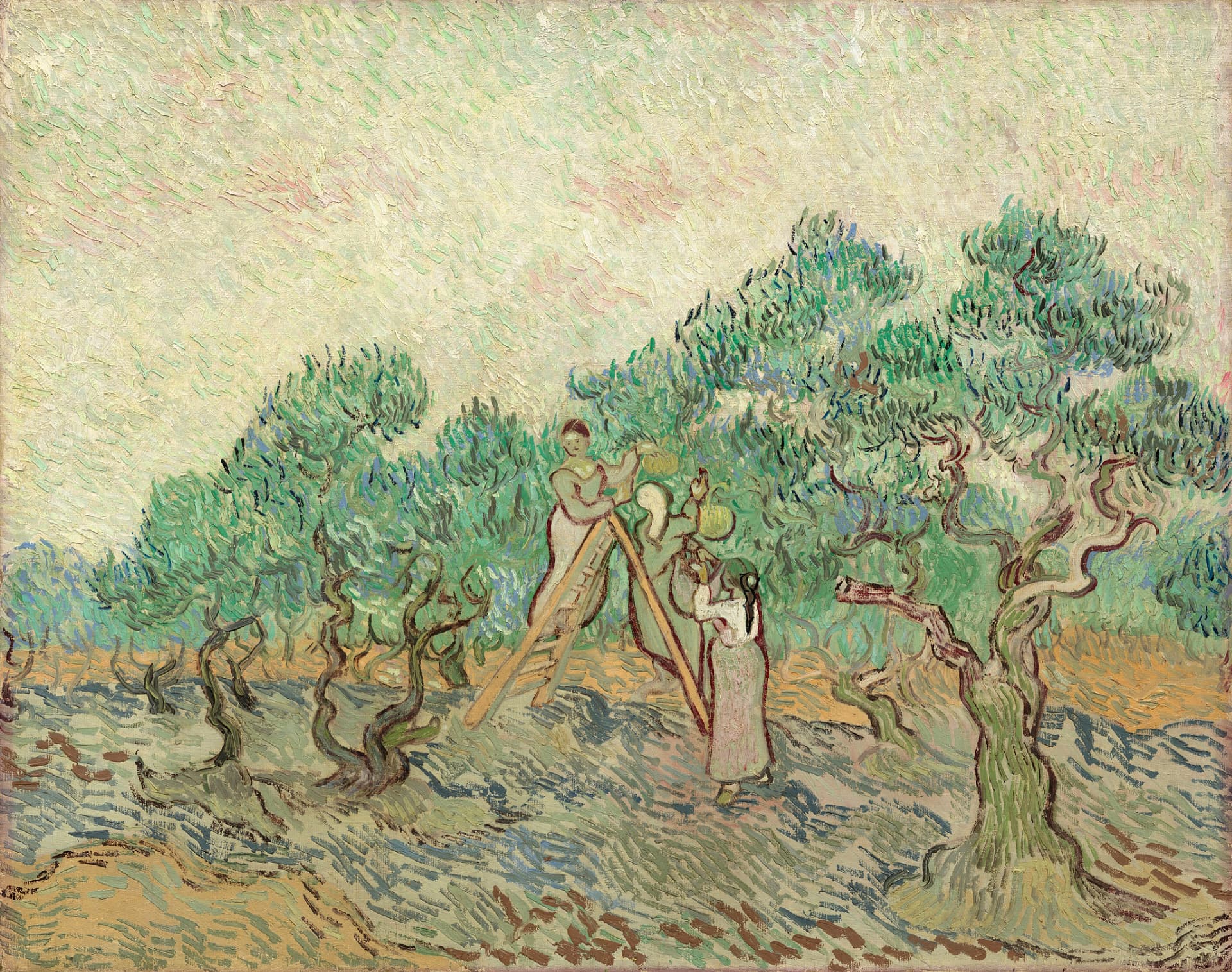
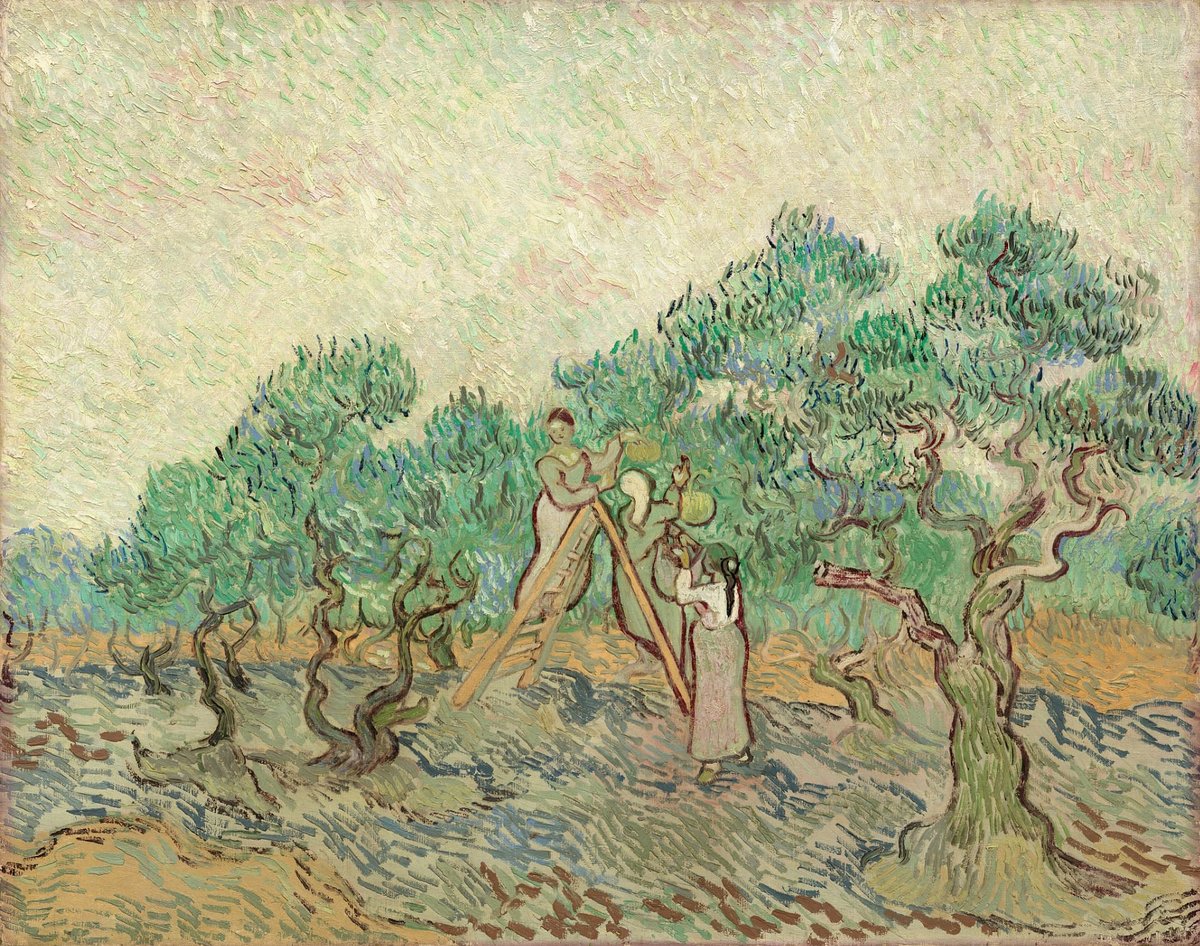
Among the most renowned figures in Western art, Dutch Post-Impressionist painter Vincent Willem van Gogh (Zundert, March 30, 1853 – Auvers-sur-Oise, July 29, 1890) influenced generations of artists and left an enduring mark on contemporary culture.
Misunderstood and often dismissed during his lifetime, Van Gogh achieved widespread recognition only after his death. Over a career lasting roughly a decade, beginning when he was 27 years old, he produced more than 2,100 artworks, including approximately 860 oil paintings, more than 1,000 drawings and countless sketches.
For Van Gogh, the olive tree was imbued with a deeply personal, consolatory symbolism.
Among his paintings — including the celebrated Sunflowers, The Starry Night, The Bedroom, The Potato Eaters, Wheatfield with Cypresses, Almond Blossom and numerous self-portraits — is a remarkable series devoted to olive trees.
Van Gogh created the works during the final years of his life, an exceptionally prolific phase of his artistic journey, while living in Provence, in southern France.
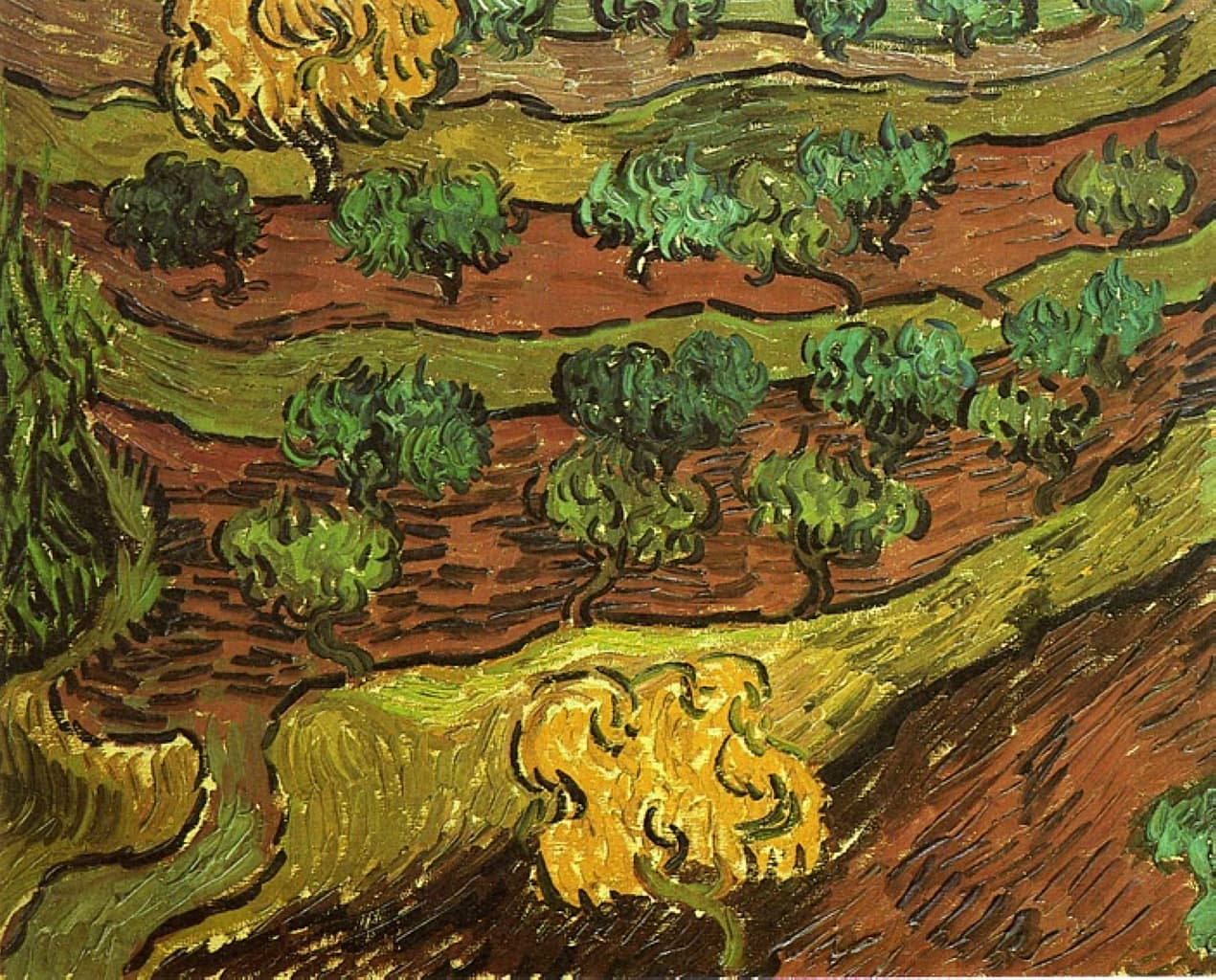
Vincent van Gogh, Olive Trees on a Hillside, 1889, Van Gogh Museum, Amsterdam (Vincent van Gogh Foundation)
In May 1889, after spending 15 months in Arles, Van Gogh voluntarily entered the asylum of Saint-Paul-de-Mausole in Saint-Rémy-de-Provence following a mental health crisis. During his stay, he found inspiration and solace in the surrounding landscape, particularly the region’s widespread olive groves.
Today, the 15 paintings he devoted to the subject are held in major museum collections across Europe and the United States.
Read the article here